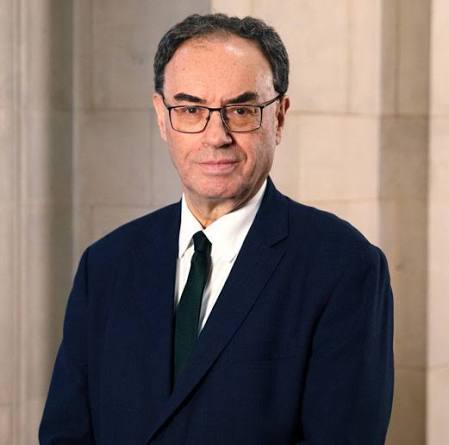
Andrew Bailey is one of Britain’s most senior financial officials. He has spent most of his professional life working in central banking, financial regulation and economic policy, eventually becoming Governor of the Bank of England in March 2020.
His career began at the Bank of England in 1985 and later included senior positions at the Financial Services Authority, the Prudential Regulation Authority and the Financial Conduct Authority. He returned to the Bank of England as Governor after serving as FCA chief executive from 2016 to 2020.
As of September 29, 2026, Bailey remains Governor of the Bank of England, with his current eight-year term scheduled to run until March 15, 2028. He also serves as Chair of the Financial Stability Board, an international body focused on the stability of the global financial system.
Latest Update on Andrew Bailey
As of September 29, 2026, Andrew Bailey continues to lead the Bank of England while also serving as Chair of the Financial Stability Board. He assumed the FSB chairmanship on July 1, 2025, succeeding Klaas Knot.
His responsibilities at the Bank include chairing the Monetary Policy Committee, Financial Policy Committee, Prudential Regulation Committee and Financial Market Infrastructure Committee. These bodies cover areas including interest rates, financial stability, prudential supervision and financial-market infrastructure.
Bailey has also remained active in discussions about inflation, interest rates, financial regulation and global financial risks. In July 2026, he delivered a speech on economic growth and financial regulation that addressed bank capital, innovation, payments, tokenisation and the risks associated with artificial intelligence.
Who Is Andrew Bailey?
Andrew John Bailey is a British central banker and financial regulator. He was born in Leicester, England, on March 30, 1959, making him 67 years old as of September 29, 2026.
Bailey has developed his career largely within Britain’s financial institutions rather than through commercial banking. His work has included economic analysis, bank supervision, crisis management, financial regulation and monetary policy.
That wide range of experience was one of the reasons he was selected to succeed Mark Carney as Governor of the Bank of England. The UK government announced his appointment in December 2019, describing his background as spanning monetary, economic and regulatory policy.
Andrew Bailey Career
Early Career and Education
Bailey attended Wyggeston Boys’ Grammar School in Leicester before studying at Queens’ College, Cambridge. He earned a bachelor’s degree in history and later completed a PhD in history at Cambridge. His doctoral research examined the impact of the Napoleonic Wars on the cotton industry in Lancashire and the structure and behaviour of firms during the Industrial Revolution.
Before joining the Bank of England, Bailey worked as a research officer at the London School of Economics. He then began his long career at the Bank of England in 1985.
Bank of England
Bailey held several positions during his first period at the Bank of England. His responsibilities included economic analysis and work connected with international economics. He also served as Private Secretary to the Governor.
One of his most important early senior assignments involved the Bank’s Special Resolution Unit. The unit was responsible for work associated with resolving failing financial institutions, an area that became particularly important during the global financial crisis.
Bailey later became Executive Director for Banking Services and Chief Cashier. The Chief Cashier is the Bank official associated with the signing of Bank of England banknotes, while the banking-services role involved important operational responsibilities.
Financial Services Authority
In April 2011, Bailey moved to the Financial Services Authority while retaining his position as an executive director of the Bank of England. He initially became Deputy Head of the Prudential Business Unit and Director of UK Banks and Building Societies.
In July 2012, he became Managing Director of the Prudential Business Unit. His responsibilities included prudential supervision of banks, investment banks and insurance companies. He was also appointed as a voting member of the interim Financial Policy Committee in 2012.
Deputy Governor and PRA Chief Executive
Bailey returned to a formal senior leadership role at the Bank of England in April 2013 when he became Deputy Governor for Prudential Regulation and Chief Executive of the Prudential Regulation Authority.
The PRA is responsible for the prudential regulation and supervision of banks, building societies, credit unions, insurers and major investment firms in the UK. Bailey therefore moved into a position directly concerned with the safety and resilience of the financial system.
Financial Conduct Authority
In July 2016, Bailey left the Bank of England to become Chief Executive of the Financial Conduct Authority. He remained in that position until March 2020.
The FCA regulates financial markets and firms in the United Kingdom and has responsibilities involving consumer protection, market integrity and competition. Bailey’s four years as FCA chief executive added another major area of financial regulation to his professional background.
Governor of the Bank of England
On December 20, 2019, the UK government announced Bailey as the successor to Mark Carney. His eight-year term began on March 16, 2020.
Bailey took office at the beginning of one of the most difficult periods for the global economy in decades. His first months as Governor coincided with the COVID-19 pandemic and the severe economic disruption caused by lockdowns and restrictions.
Since then, his tenure has included the recovery from the pandemic, a major inflation surge, rapid increases in interest rates and subsequent efforts to return inflation toward the Bank’s 2% target.
In a February 2026 report to the Treasury Committee, Bailey described how the Monetary Policy Committee had reduced Bank Rate from 4.75% in November 2024 to 3.75% by February 2026 as underlying inflation pressures showed signs of easing.
Andrew Bailey and the Financial Stability Board
Bailey became Chair of the Financial Stability Board on July 1, 2025. The FSB brings together authorities from major economies to promote financial stability and coordinate international financial regulation.
His FSB role complements his position at the Bank of England. In 2026, his international responsibilities have included work on financial vulnerabilities, cross-border payments, artificial intelligence and the resilience of the global financial system.
In August 2026, the FSB published a warning from Bailey about risks associated with frontier artificial intelligence models, particularly their potential implications for cyber risk and financial stability.
Andrew Bailey Age
Andrew Bailey was born on March 30, 1959, in Leicester, England. He is 67 years old as of September 29, 2026.
His birth year and date have also been referenced in official Bank of England material and public records. His long career began in the mid-1980s, giving him more than four decades of experience in economics, central banking and financial regulation.
Andrew Bailey Salary
Andrew Bailey’s salary is one of the better-documented parts of his finances because the Bank of England publishes remuneration information for its Governor.
When Bailey became Governor in March 2020, his annual salary was set at £495,000. The Bank later confirmed that he had not accepted increases to his base salary.
The Bank of England’s 2025 annual report showed that Bailey’s base salary remained £495,000 during the 2024/25 financial year. His total remuneration for that year was £598,074, including £99,000 paid in lieu of pension, taxable benefits and other remuneration.
The same report said that if Bailey had accepted the annual salary increases applied to the Governor’s role, his base salary for 2024/25 would have been £533,100. Instead, his actual base salary remained £495,000.
Salary clarification: £495,000 is his published base salary for 2024/25. His reported total remuneration was £598,074 because it included other payments and benefits. These figures should not be described as his net worth or take-home pay.
Andrew Bailey Net Worth
There is no official public figure establishing Andrew Bailey’s exact personal net worth. Unlike his salary, his complete assets, investments, property holdings and liabilities are not published in a single authoritative financial statement.
Some commercial websites have estimated his wealth at approximately £5 million. However, such estimates are not independently audited and may be based on assumptions about his salary, pension benefits, savings and investment returns.
For that reason, the most accurate way to describe Andrew Bailey’s net worth is as unconfirmed. His official remuneration is documented, but his total personal wealth is not.
His long career at the Bank of England, FCA and other regulatory institutions has provided substantial public-sector earnings and pension benefits. Still, those facts alone do not establish an exact current net-worth figure.
Andrew Bailey Wife and Family
Andrew Bailey is married to Cheryl Schonhardt-Bailey, an American-born British political scientist and professor at the London School of Economics. She has also served as Head of the LSE Department of Government.
The couple has two children. Bailey generally keeps his private family life away from the public spotlight, so detailed information about his children is limited in authoritative sources.
His wife’s academic work has included research into political institutions, trade policy and the analysis of political and monetary-policy debates. The couple therefore have professional backgrounds connected to public policy, economics and political institutions.
Andrew Bailey Political Affiliation
Andrew Bailey is a central banker and public official rather than an elected politician. His position as Governor requires him to operate within the statutory framework governing the Bank of England and its policy committees.
His role includes responsibility for monetary and financial stability, while the Monetary Policy Committee independently makes decisions on the Bank Rate within the Bank’s institutional framework.
Andrew Bailey’s Role in UK Monetary Policy
As Governor, Bailey chairs the Monetary Policy Committee. The MPC is responsible for setting the Bank Rate and using monetary policy to achieve the government’s inflation target.
Bailey’s public speeches and reports frequently address inflation, wages, economic growth, financial conditions and risks to the UK economy. In 2026, energy prices and geopolitical developments have remained important parts of the Bank’s assessment of inflation risks.
His role means that his statements can receive significant attention from financial markets because investors use central-bank guidance when assessing the future direction of interest rates and the economy.
Quick Table
| Detail | Information |
|---|---|
| Full Name | Andrew John Bailey |
| Date of Birth | March 30, 1959 |
| Age | 67 as of September 29, 2026 |
| Birthplace | Leicester, England |
| Profession | Central banker and financial regulator |
| Current Role | Governor of the Bank of England |
| Governor Term | March 16, 2020 – March 15, 2028 |
| FSB Role | Chair of the Financial Stability Board |
| FSB Term Began | July 1, 2025 |
| Base Salary | £495,000 for 2024/25 |
| 2024/25 Total Remuneration | £598,074 |
| Estimated Net Worth | About £5 million according to some third-party estimates; unverified |
| Education | Queens’ College, University of Cambridge |
| Spouse | Cheryl Schonhardt-Bailey |
| Children | Two |
Reader Questions
Who is Andrew Bailey?
Andrew Bailey is a British central banker and the Governor of the Bank of England. He has held senior positions at the Bank of England, Financial Services Authority, Prudential Regulation Authority and Financial Conduct Authority.
How old is Andrew Bailey?
Andrew Bailey was born on March 30, 1959, in Leicester. He is 67 years old as of September 29, 2026.
What is Andrew Bailey’s salary?
His published Bank of England base salary was £495,000 in the 2024/25 financial year. His total remuneration for that year was £598,074 after other payments and benefits were included.
What is Andrew Bailey’s net worth?
Andrew Bailey’s exact net worth has not been officially disclosed. Some third-party websites estimate it at around £5 million, but that figure should be treated as an unverified estimate rather than a confirmed amount.
When did Andrew Bailey become Governor of the Bank of England?
Andrew Bailey became Governor on March 16, 2020, succeeding Mark Carney. His current appointment is for eight years and runs until March 15, 2028.
Where did Andrew Bailey study?
Bailey attended Wyggeston Boys’ Grammar School in Leicester before studying history at Queens’ College, Cambridge. He later completed a PhD in history at Cambridge.
Who is Andrew Bailey’s wife?
Andrew Bailey is married to Cheryl Schonhardt-Bailey, a political scientist and professor at the London School of Economics. They have two children.
What was Andrew Bailey’s job before becoming Governor?
Immediately before becoming Governor, Bailey was Chief Executive of the Financial Conduct Authority from July 2016 until March 2020. Before that, he was Deputy Governor of the Bank of England for Prudential Regulation and Chief Executive of the Prudential Regulation Authority.
Is Andrew Bailey the Chair of the Financial Stability Board?
Yes. Andrew Bailey became Chair of the Financial Stability Board on July 1, 2025, while continuing as Governor of the Bank of England.
Wrap-Up
Andrew Bailey has built a career almost entirely around central banking and financial regulation. Starting at the Bank of England in 1985, he progressed through economic analysis, bank supervision, crisis management and senior regulatory leadership before becoming Governor in 2020.
His career also includes leadership of the Financial Conduct Authority and the Prudential Regulation Authority. These positions gave him experience across several parts of Britain’s financial system before he returned to the Bank’s top job.
As of September 29, 2026, Bailey remains Governor and also serves as Chair of the Financial Stability Board. His work therefore extends beyond UK monetary policy into international efforts aimed at maintaining financial stability.
For readers researching Andrew Bailey’s finances, his salary is easier to verify than his wealth. The Bank of England reported a £495,000 base salary and £598,074 total remuneration for 2024/25. His personal net worth, however, has not been officially established, so online estimates should be treated with caution.
Disclaimer
This article is provided for informational purposes and reflects publicly available information reviewed as of September 29, 2026. Salary figures are based on official Bank of England remuneration disclosures. Any net-worth figure mentioned from third-party sources is an estimate and is not an independently verified statement of Andrew Bailey’s personal wealth.
